Zetamac circa 2023–2026
Mental Arithmetic · Longitudinal Data · Self-Experiment
I started doing Zetamac just to exercise my brain.
My mother used to take me to abacus classes when I was a kid (back in Ahmedabad, circa 2006–2008ish?), so
mental arithmetic has been around for a long time.
These days I'm mostly interested in consistency rather than chasing a single huge score.
I've kept the data because it's fun.
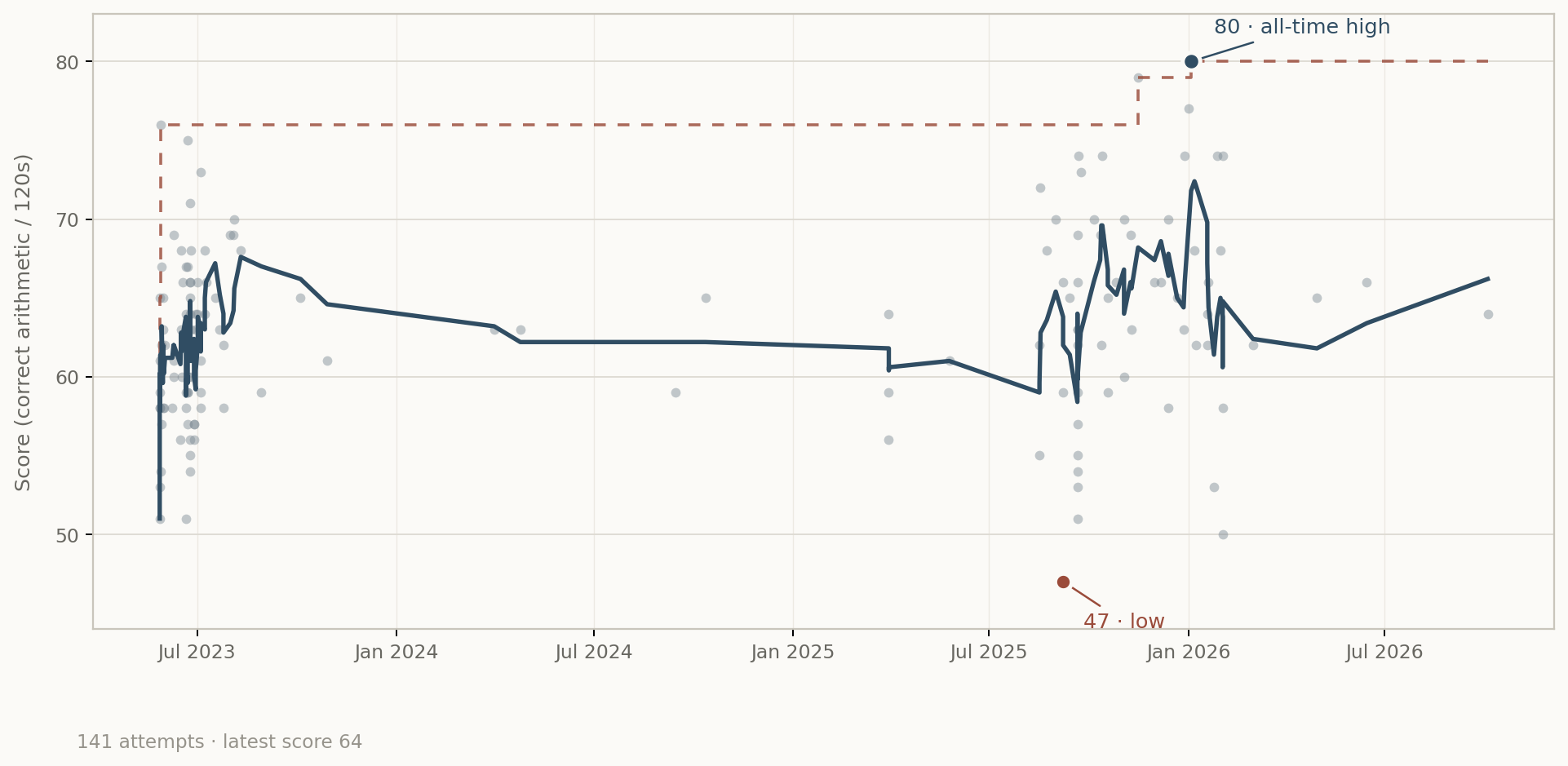
Zetamac scores
May 2023 – Oct 2026
141 attempts · most recent 64 · max 80 · min 47
Each dot is an attempt. The blue line is a five-attempt moving average; the dashed
line shows the personal best over time.
Zetamac
Round Numbers circa 2024
Behavioral Economics · Observation · Self-Experiment
I've always liked behavioral economics, partly because I enjoy seeing ideas from books show up in
completely ordinary situations.
After reading work by legends like Richard Thaler, Cass Sunstein, Angela Duckworth, Daniel Kahneman, I
started noticing how often people
seem to prefer round numbers.
Then I noticed that I was doing the same thing at the gym.
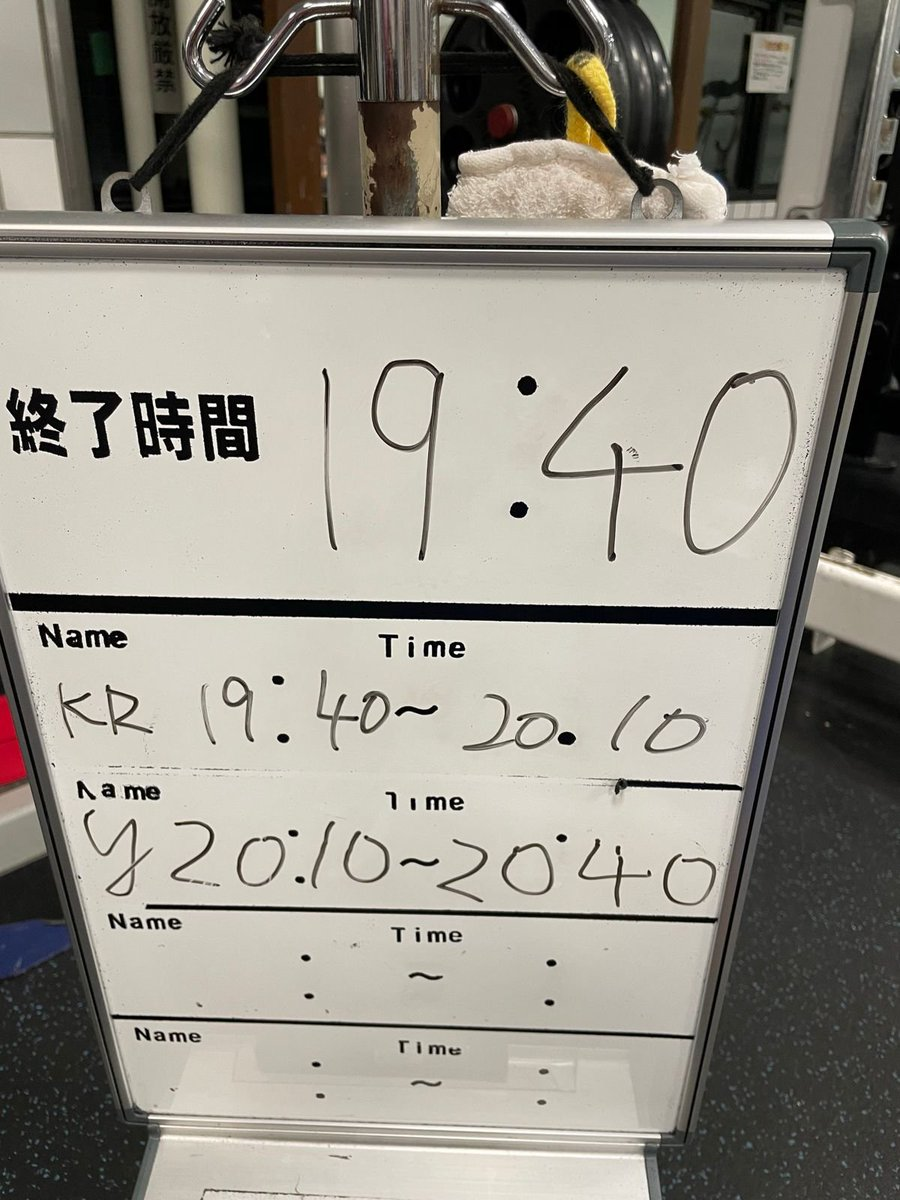
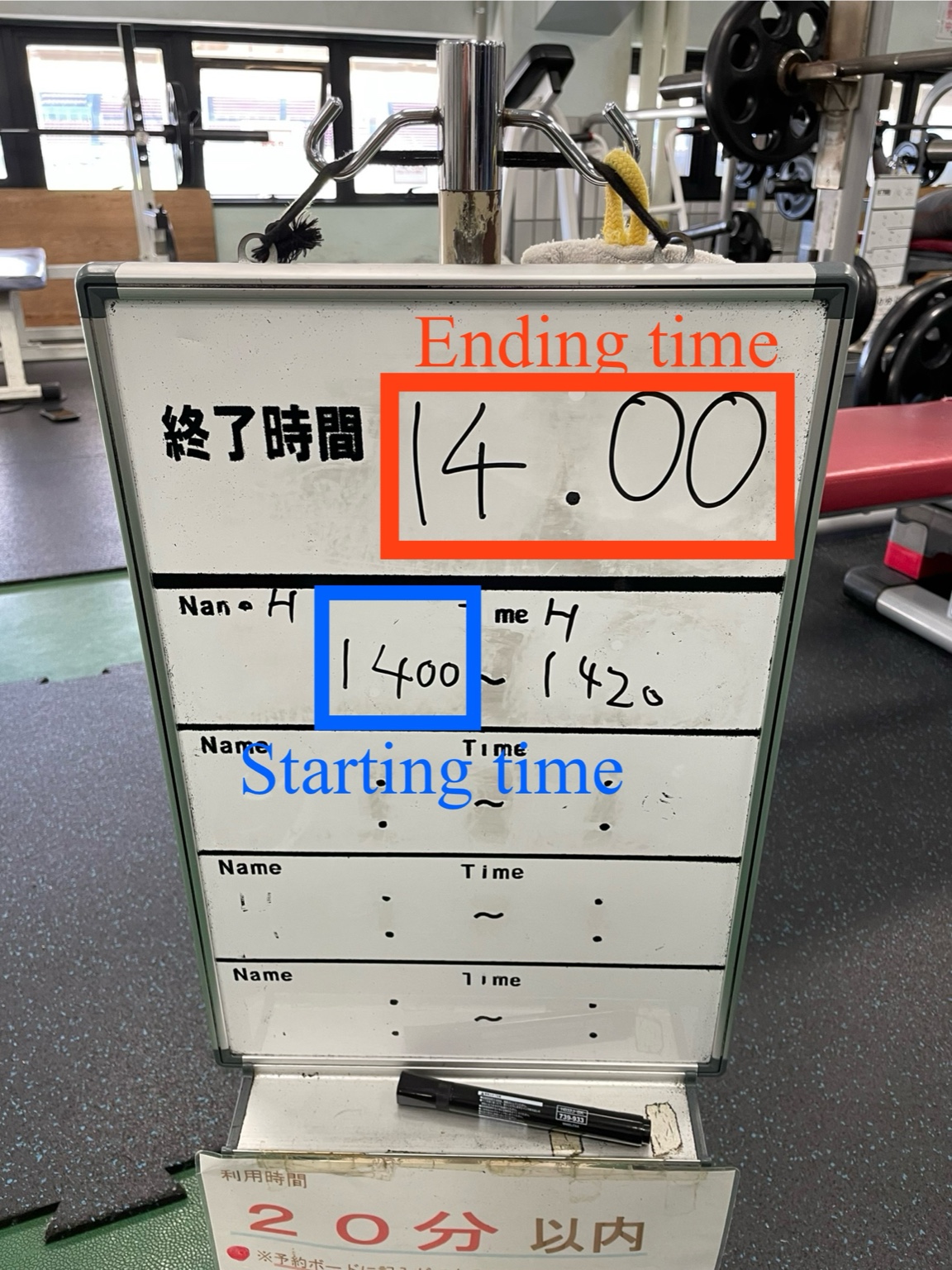
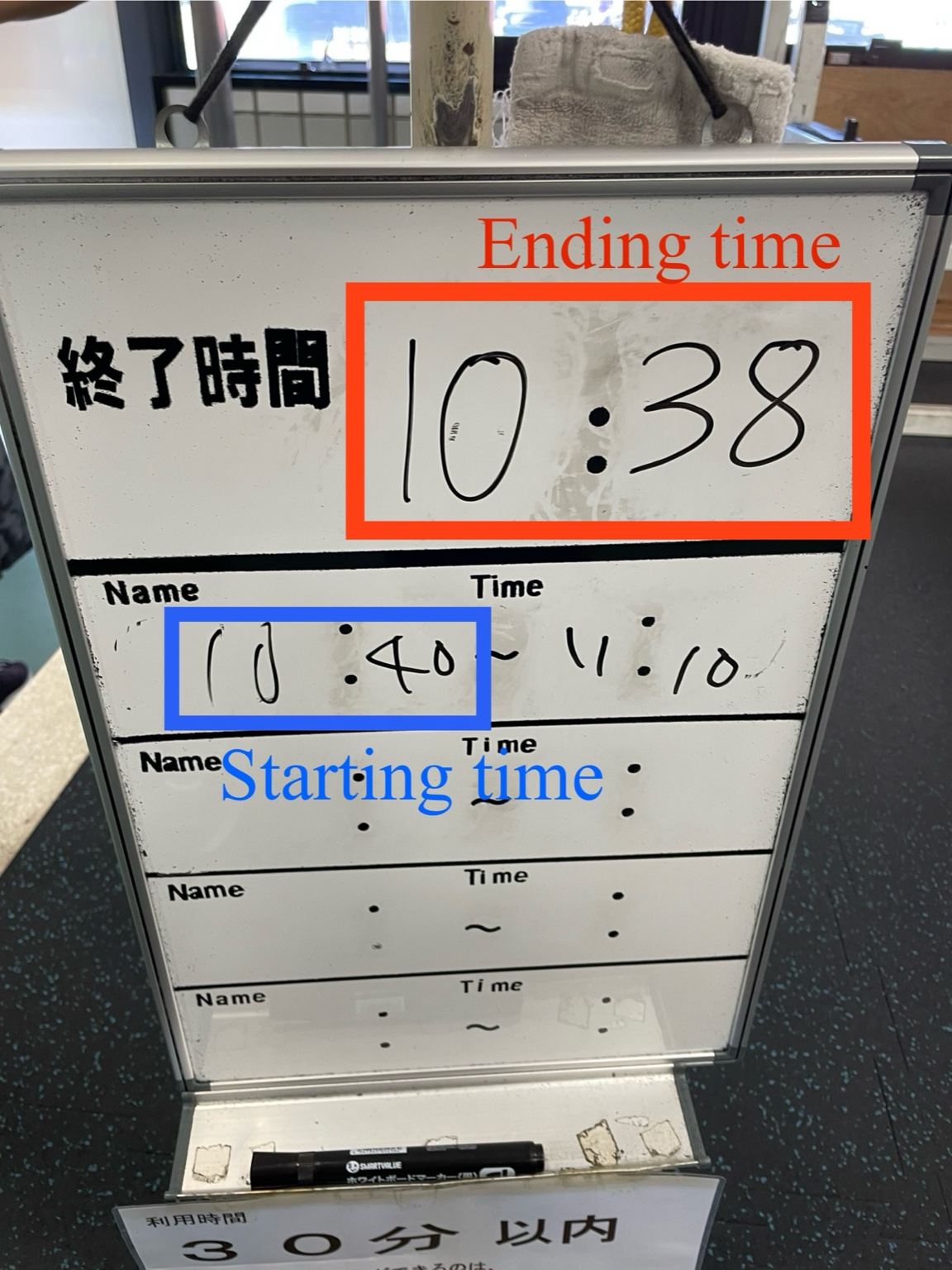
I compared round-number workout times with non-round ones and found that the round-number sessions tended
to give me less “buffer” before the next commitment.
The interesting part wasn't really the result.
It was that a behavior I'd read about in books also seemed to appear in my own life.
And, admittedly, I started using round numbers strategically because they gave me a little more buffer, a
small “nudge” which I used to get myself more time, so to speak.
Cass Sunstein later liked my post about it, which was a nice bit of validation.
Footnote: tbh, I was disproportionately excited about this.
“You spin my head right round, right round.”
— Flo Rida
Original workout duration analysis (left) and Cass Sunstein liking the post on X (right).
Logged workout sets on round versus non-round intervals.
Original post on X
Leg Days circa 2024
Self-Experiment · Fitness · Heart Rate
Leg day is still the most excruciating entry in my personal dataset.
I originally looked at this because everyone says leg day is harder, and after enough Bulgarian split
squats I decided that “everyone” deserved some empirical support.
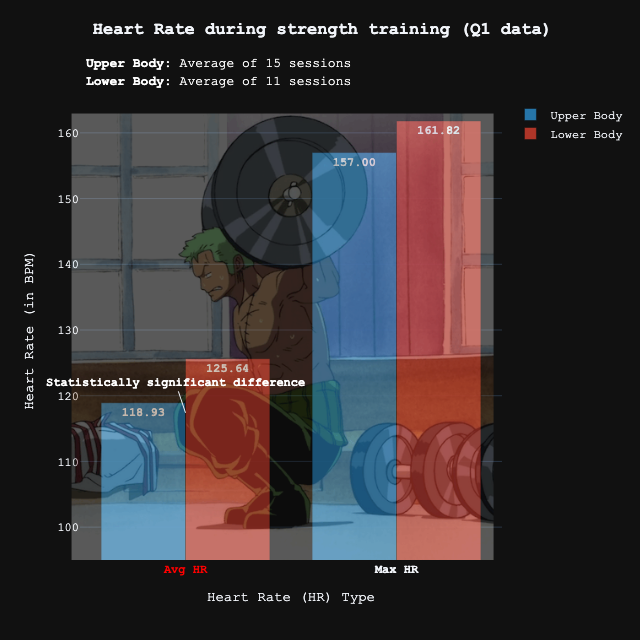
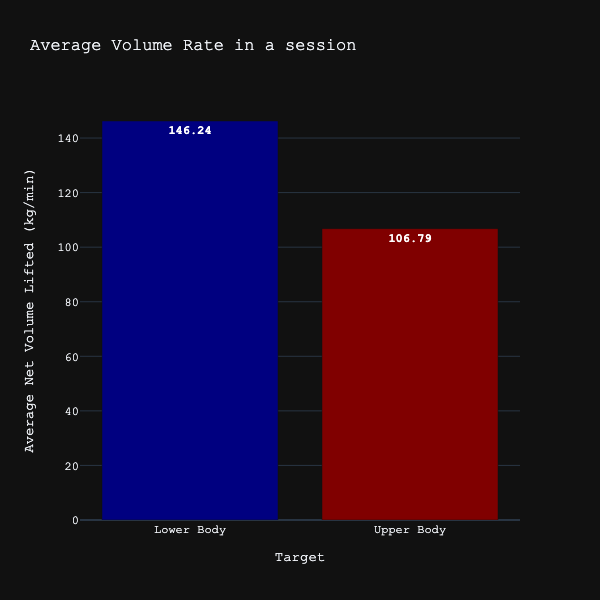
I compared heart-rate patterns between leg and non-leg gym sessions.
The result was pretty straightforward: leg-day sessions were more challenging.
No regression discontinuity. No Bayesian hierarchical model.
Just two columns of numbers and a conclusion I was hoping to reach.
Heart-rate patterns and session volume rate comparing leg days against other workouts.
Cumulative Exercise circa 2024
Data Visualization · Running · Storytelling
I had a lot of longitudinal exercise data sitting around, but a spreadsheet isn't exactly the most
exciting way to look at several hours of exercising.
I wanted to turn it into something that felt more like a Nike ad: good music, visual storytelling, and a
sense of movement.
So I made a video.
The underlying data is pretty mundane.
That is partly why I like the project.
There's something satisfying about taking a boring time series and making it feel like a story.